Fit guide · Sterling Heights, MI
How a suit should actually fit: shoulders, sleeve, break — a 2-minute self-check
You do not need a tailor's eye to judge a suit. You need six checks, in the right order — starting with the one thing tailoring cannot fix. Run them in any mirror, on any suit, even the closet one.
- Rule #1
- Shoulders first — they can't be tailored
- Tailorable
- Hem, waist, sleeve — typically 3 days–2 weeks
- Sizes
- Small–2XL, some larger; extended orderable
- Visit
- 37742 Van Dyke Ave · Mon–Sat 11–8, Sun 11–6
Check 1: the shoulders (the one that decides everything)
Put the jacket on and find the shoulder seam. It should sit right at the edge of your own shoulder — where shoulder ends and arm begins — and lie smooth along the top. Two failure signs: the seam drooping past your shoulder, leaving a soft shelf of fabric (too big), or a divot and tension where the sleeve begins (too small).
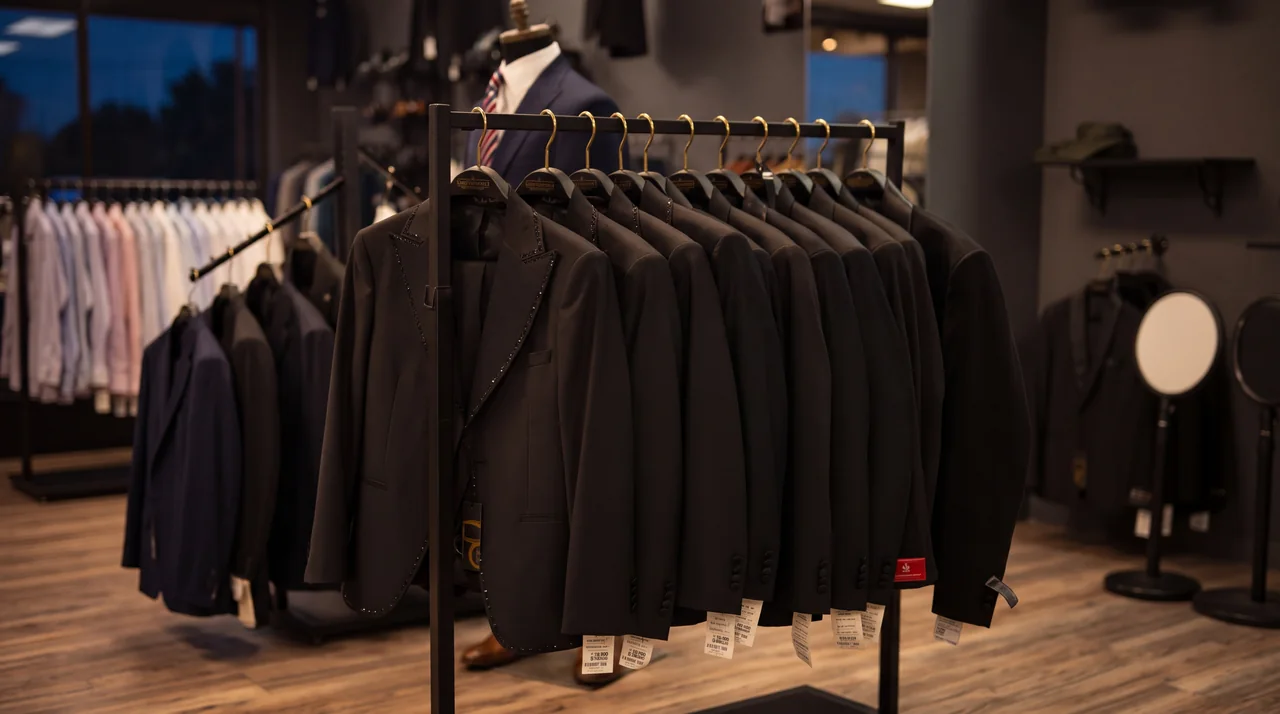
Why be strict here? Shoulders are the suit's architecture. A tailor can adjust hems, waists and sleeves all day; rebuilding a shoulder means re-making the jacket, and nobody does that on a ready-to-wear suit. Pick the suit that fits your shoulders, and tailor the rest. Our stylists start every fitting here, on the men's suits floor.
Checks 2–4: chest, sleeve, jacket length
- Chest and button: button the jacket (top button on a two-button). It should close without pulling — no X of tension across the front — and you should be able to slide a flat hand inside at your chest. Loose is fixable; strained is the wrong size.
- Sleeve: arms hanging naturally, the jacket sleeve should end at your wrist bone and show about a quarter to a half inch of shirt cuff. No cuff showing means long sleeves — an easy alteration, not a rejection.
- Jacket length: the hem should roughly cover your seat and land near the middle of your hand when your arms hang. Slightly long or short is style; a jacket ending mid-thigh or at the waist is the wrong proportions.
Checks 5–6: waist and the break
Trouser waist: it should sit at your natural waist and stay up without a belt cinched tight — and you should be able to sit and climb a step comfortably. Waist adjustments are among the most common alterations we do, in both directions, so close is good enough here.
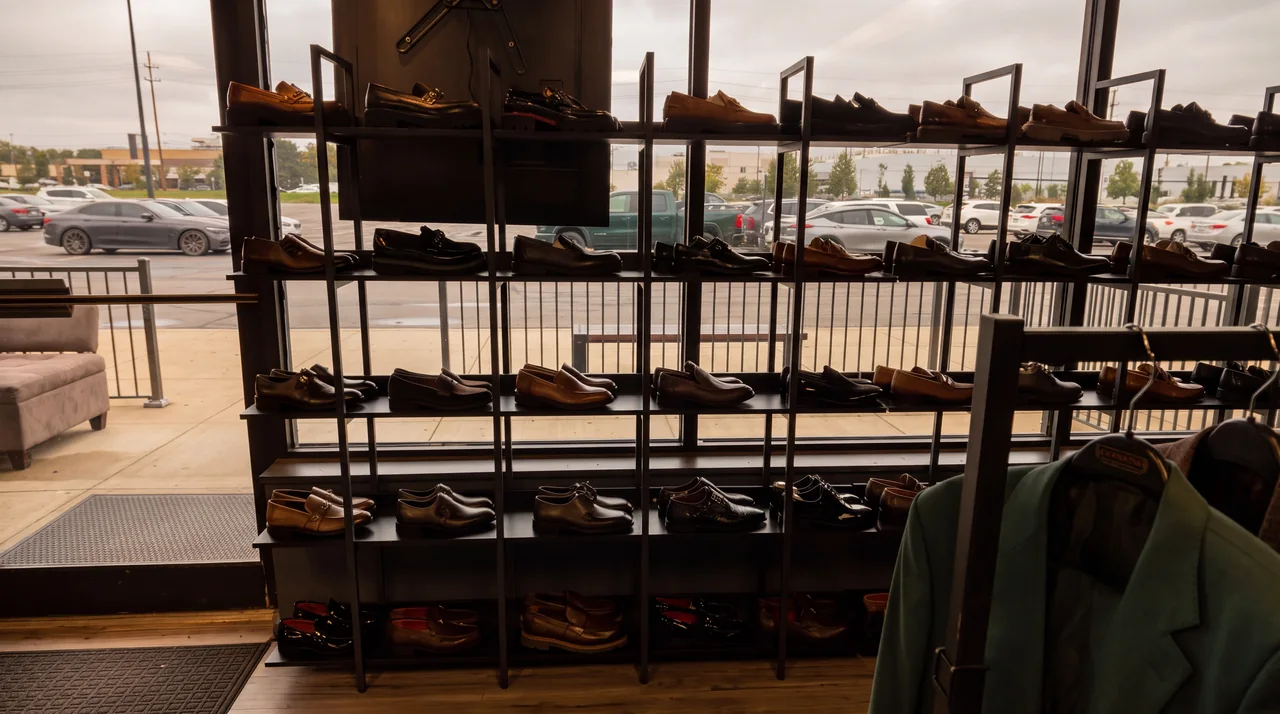
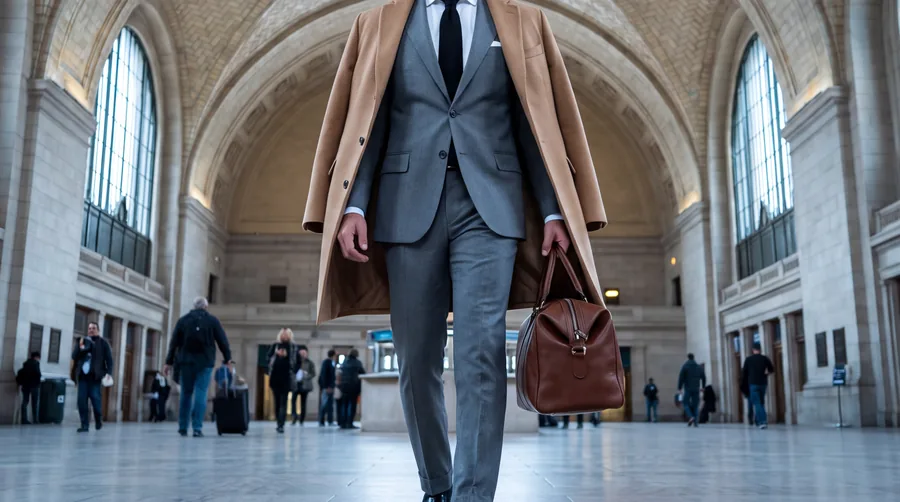
The break is where the trouser meets the shoe. A slight break — the front crease resting lightly on the shoe with one soft fold — suits most men and most occasions. No break reads sharper; a full break reads traditional and needs the trouser to carry it. There is no wrong answer, only an unpinned one: the break is set against the actual shoes you will wear, which is why we ask you to bring them. Full alteration details are on our alterations and tailoring page.
What tailoring can fix — and what it can't
Here is the honest ledger our tailors work from. Fixable: trouser hem and taper, sleeve length, taking in a trouser waist or a jacket body, small cleanups everywhere. Not fixable: shoulders that are too wide or too narrow, a jacket that is fundamentally the wrong length, a size that is simply wrong. That ledger is the entire argument for buying a suit with a stylist instead of alone from a rack: the rack pick has to be right exactly where the needle cannot help, and close everywhere else.
It is also why we do not sell made-to-measure and do not need to. A ready-to-wear suit chosen on correct shoulders and tailored everywhere else gives most men a custom-looking fit — at suits from , on a timeline of days, not the weeks a made-to-measure order takes. Alterations here typically run 3 days to 2 weeks, with rush available.
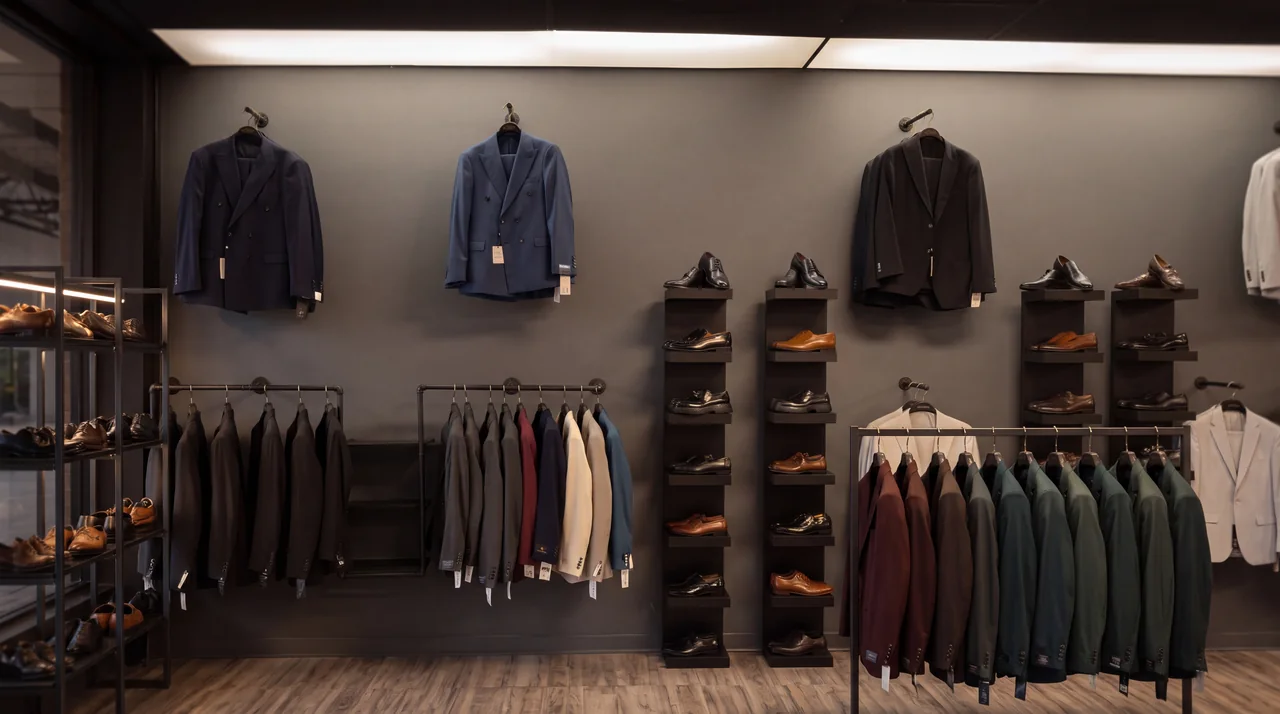
Run the check on the suit in your closet
Before you buy anything new, run these six checks on the suit you already own. Shoulders right but sleeve long and waist loose? That suit is one alterations visit away from looking new — bring it in; our tailors also work on garments bought elsewhere, including some women's garments. Shoulders wrong? Then the closet suit is done, and you know what to look for first in its replacement.
Or let a stylist run it in the store
The self-check takes two minutes; the in-store version takes about the same, with better light and a second pair of eyes. A stylist will check your shoulders, pin the rest, and tell you plainly what a suit needs — including if the answer is nothing. Sizes run Small to 2XL, some larger, extended orderable.
Blite Fashion, 37742 Van Dyke Ave, Sterling Place Plaza, Sterling Heights — big free parking lot, no appointment needed. Open Monday to Saturday 11 am to 8 pm and Sunday 11 am to 6 pm. Call or text (586) 983-9143.
Questions, answered straight
Fit questions, answered the way our stylists answer them at the mirror. Anything else, call or text (586) 983-9143.
What is the most important part of a suit's fit?
The shoulders, and it is not close. The jacket's shoulder seam should sit right at the edge of your own shoulder, with no overhang and no pulling. Shoulders are the one part tailoring cannot meaningfully rebuild — everything else on this list can be adjusted, so the suit you pick has to be right at the shoulders first.
How much shirt cuff should show below a suit sleeve?
About a quarter to a half inch of shirt cuff — a sliver. If you see no cuff at all, the jacket sleeve is long; if you see an inch, it is short. Sleeve length is one of the easiest alterations there is, so do not reject a suit over it — reject a suit over the shoulders instead.
What trouser break should I ask for?
For most men, a slight break: the trouser front resting lightly on the shoe with one soft fold. No break — trousers ending just above the shoe — reads sharper and more modern; a full break pools more fabric and reads traditional. It is pinned against the shoes you will actually wear, which is why we ask you to bring them to the fitting.
What can tailoring fix — and what can it not fix?
Tailoring handles hems, sleeve length, taking in the waist, tapering trousers and slimming a jacket body. It cannot rebuild shoulders, change a jacket's fundamental length by much, or turn the wrong size into the right one. That is the whole logic of buying with a stylist: pick the suit that is right where tailoring cannot help, and tailor everything else.
How long do fit alterations take at Blite Fashion?
Alterations typically take 3 days to 2 weeks depending on the work. Rush service is available for an extra charge, and simple alterations — a hem, a sleeve — can be done the same day when the tailor is available. The fitting and pinning happen in the store when you buy, so the clock starts immediately.
Should a suit feel tight?
No. Fitted means clean lines, not tension. You should be able to button the jacket without the front pulling into an X, slip a flat hand inside the buttoned jacket at your chest, sit down in the trousers, and raise your arms without the whole jacket climbing. Slim is a silhouette; tight is a mistake.
Where is Blite Fashion and when are you open?
Blite Fashion is at 37742 Van Dyke Ave, Sterling Heights, MI 48312, in Sterling Place Plaza, with a big free parking lot. Hours are Monday to Saturday 11 am to 8 pm and Sunday 11 am to 6 pm. Call or text (586) 983-9143.
Keep reading
Men's suits in Sterling Heights — put the six checks to work on the real floor.
Alterations and tailoring — what we adjust, and how the pinning works.
How long do alterations take? — timelines, rush and same-day, honestly.
Get a second pair of eyes
Walk in during store hours and a stylist will run the checks on you — no obligation to buy. Blite Fashion, 37742 Van Dyke Ave, Sterling Heights — (586) 983-9143, open Mon–Sat 11–8 and Sun 11–6.
Blite stylist
What are you dressing for?
Tell us the occasion and the date, add a photo for fit, or talk it through live. We'll pull complete looks; a stylist confirms pieces and sizes in store.
Connecting
0:00Suggestions only. A stylist confirms pieces, sizes and availability. Photos are only used to answer you; Blite doesn't keep them. Text the store